Sewer gas smell in the house: the usual causes
Updated October 30, 2026 · 2-minute read · Old House Sewer Lines
A sewer smell in the house usually comes from a trap that has dried out, a cleanout cap that is loose or missing, or a vent that is blocked. Each one opens a path for sewer air into living space. If there is any chance the smell is natural gas, skip the checks and get out first.
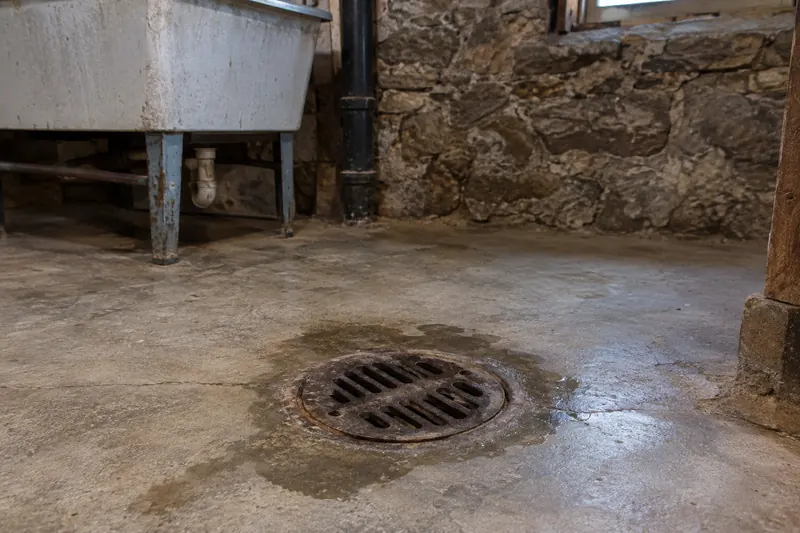
Every sink, tub, shower and floor drain has a trap, a bend that holds water as a seal against the sewer. The state plumbing code sets that seal at 2 to 4 inches of water (§1002.4, ICC). When the water evaporates, the seal is gone.
Dry traps
Water in a floor drain or an idle fixture slowly evaporates. North Dakota State University Extension identifies those emptied traps as an entry route for sewer gas and recommends a quart of water down each such drain every three to four weeks (NDSU Extension). Phoenix's Water Services Department says that one quart is enough to fill a P-trap (Phoenix). Any fixture that sits unused for weeks is a candidate.
Cleanout caps and the house trap
On its gas-safety page, Con Edison lists sound, tightly fastened indoor sewer-line caps as a way to stop gases entering through the sewer (Con Edison). In one study cited by EPA, almost a quarter of service-lateral defects were missing or damaged cleanout caps; that study dates from 1995. In older houses, the NYS Department of State notes, a house trap is sometimes the only cleanout where the building drain meets the sewer, so its plugs are caps too. See the house trap.
The vent beside a house trap, often called a fresh-air inlet, can also be a source. The same DOS guidance calls "fresh air intake" an inaccurate name, because vents carry air both ways and can give off sewer gas, which is why the code keeps them away from windows and other openings (NYS DOS). More in the fresh-air inlet.
Vents and backups
A vent stack that is iced over or plugged at the roof can also force sewer gas indoors, according to NDSU, and the first clue may be a toilet that gurgles or flushes poorly. A drain that is backing up can also smell: the National Capital Poison Center says leaky or backed-up pipes and drains can give off a musty, sewage-like odor. Gurgling and slow drains are covered in the gurgling toilet. If the line is backed up, do not open a cleanout or a house-trap plug; sewage under pressure can blow out, and clearing it is a plumber's job.
People exposed to sewer gas indoors can get headaches, feel sick or dizzy, or grow drowsy, NDSU says. A rotten-egg odor from the hot tap only is usually the water heater, not the sewer; see rotten egg smell from hot water or sewer.
Key facts
- The code's trap seal range is 2 to 4 inches of water (§1002.4, ICC).
- NDSU advises about a quart of water for each seldom-used drain, repeated every three to four weeks (NDSU Extension).
- Con Edison ties loose indoor sewer caps to gases getting in (Con Edison).
- Vents beside house traps can emit sewer gas and must be kept away from windows (NYS DOS).
- Natural gas has mercaptan added so leaks can be smelled (Con Edison).