The fresh-air inlet is a vent, and it can let sewer gas out
Updated October 30, 2026 · 3-minute read · Old House Sewer Lines
A fresh-air inlet is the vent pipe connected to the house side of an old house trap, and despite its name it does not only take air in. The NYS Department of State says the vent can let gases out as well, which is why the code keeps such openings away from windows.
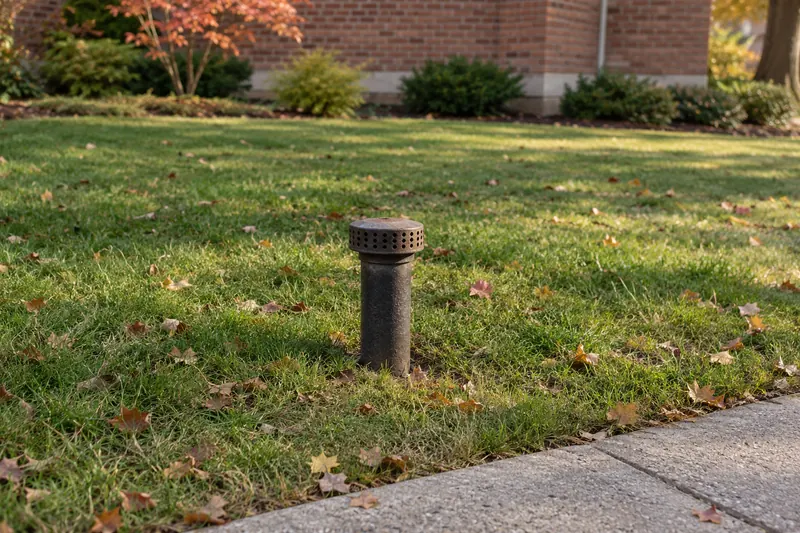
The DOS bulletin on building traps describes the vent on the upstream side of the trap as "commonly referred to as a 'fresh air intake'" and then says the name is "an inaccurate description for a vent because all vents by definition enable air to be transferred in both directions" (NYS DOS, Building Traps). Because a vent can emit sewer gas, it has to keep its distance from windows and other openings under section P3103.5 of the Residential Code of New York State.
What it is attached to
The inlet only makes sense alongside the trap it serves: a water-filled bend in the main drain meant to keep air in the street sewer from reaching the house piping. New York's plumbing code now prohibits new house traps outright in §1002.6, and DOS calls them redundant, since each fixture has its own trap seal of 2 to 4 inches. Existing traps may stay until the plumbing is altered, so many older houses still have both the trap and its vent. The trap is covered in the house trap.
If a trap is removed under a permit, the work has to meet the code for new work, and the plumber deals with the vent at the same time. DOS adds that new cleanouts may be needed, because the trap is sometimes the only one. See removing a house trap.
When it smells
A sewer odor near an inlet is not surprising, given what DOS says about two-way airflow. Indoors, the more common source is a dried-out trap. North Dakota State University Extension says sewer gas often enters through dry traps in basement floor drains and in fixtures used rarely, and its fix is simple: roughly a quart of water poured into each such drain once every three or four weeks (NDSU Extension). Con Edison also advises keeping indoor sewer-line caps in good condition and tightly attached (Con Edison gas safety). More causes are in sewer gas smell in the house.
Do not rely on your nose to judge how much gas is present. The federal toxic-substances agency says people can lose the ability to smell hydrogen sulfide after about 2 to 15 minutes at around 100 ppm, which makes odor a poor warning (ATSDR). If anyone has headaches, nausea or dizziness, the symptoms NDSU lists for sewer gas indoors, get everyone into fresh air first; if the smell could be natural gas, leave and call 911 or Con Edison from outside. Then call a plumber.
What owners can do
Homeowner scope here is small and specific. Keep fixture traps filled, keep cleanout caps tight, and note when and where an odor appears so a plumber can trace it. Changing, capping or removing the vent or the trap is permit work for a plumber licensed by Westchester County, and any change has to satisfy the current code; the 2025 Plumbing Code of New York State has been in force since December 31, 2025.
Key facts
- DOS says the "fresh air intake" name is inaccurate, because vents move air in both directions (NYS DOS).
- Because it can emit gases, the vent must be kept away from windows and openings (RCNYS P3103.5).
- §1002.6 rules out installing any new house trap (ICC).
- Topping up seldom-used drains with roughly a quart once every 3 to 4 weeks keeps their seals wet, per NDSU (NDSU).
- At about 100 ppm, people can lose the ability to smell hydrogen sulfide within 2 to 15 minutes (ATSDR).