SDR 35 or Schedule 40: which PVC belongs in a sewer line
Updated October 30, 2026 · 3-minute read · Old House Sewer Lines
SDR 35 vs Schedule 40 is not a contest under New York's plumbing code: both are approved for a building sewer. What matters is the ASTM standard each is made to, and Schedule 40 pressure pipe made only to ASTM D1785 is not on the list.
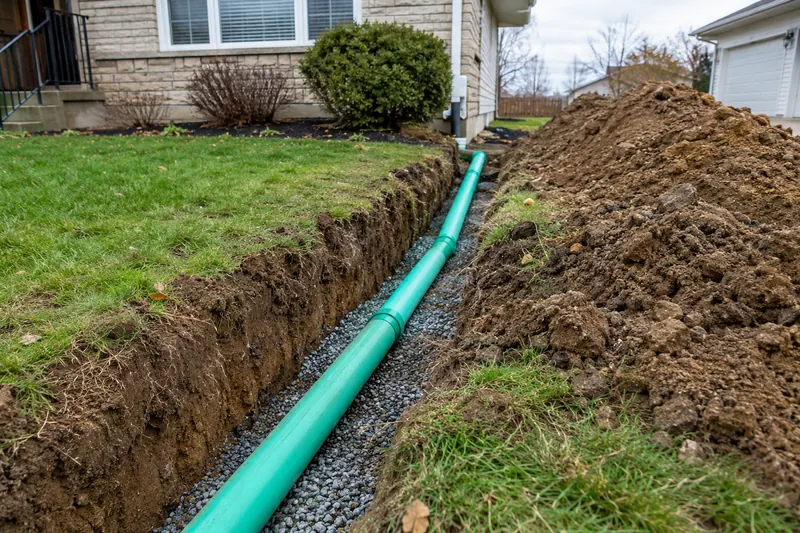
Table 702.3 of the Plumbing Code of New York State lists the pipe allowed for a building sewer, the line from the house to the public main (NYSPC 2020, Chapter 7). One PVC row covers "sewer and drain diameters," including SDR 35 (PS 46), under ASTM D3034, F891 and F1488. Another covers Schedule 40 PVC under ASTM D2665, F891 and F1488. The current 2025 code keeps both PVC entries, describing them as Schedule 40 IPS sizes and sewer-and-drain sizes (2025 PCNYS).
Three standards, three jobs
| Standard | What it covers | On Table 702.3 for building sewers |
|---|---|---|
| ASTM D3034 | Type PSM PVC sewer pipe and fittings (includes SDR 35) | Yes |
| ASTM D2665 | PVC drain, waste and vent (DWV) pipe, Schedule 40 | Yes |
| ASTM D1785 | Schedule 40, 80 and 120 PVC for pressurized liquids only | No |
ASTM D3034 is the dedicated sewer pipe standard (ASTM D3034). ASTM D2665 covers PVC drain, waste and vent pipe (ASTM D2665). ASTM D1785 also makes Schedule 40 pipe, but its own scope says it is for the distribution of pressurized liquids only (ASTM D1785). Both are sold as Schedule 40, so the standard, not the schedule, is what separates sewer-grade pipe from pressure pipe.
ABS is the other common plastic. ASTM D2661 covers Schedule 40 ABS drain, waste and vent pipe, and ABS is also on the approved building sewer list (ASTM D2661).
Rules that apply either way
Whichever PVC is used, the line must meet the same slope and size rules. Under Table 704.1, any sewer from 3 to 6 inches across must drop at least an eighth of an inch every foot, in a straight, even run. Section 704.2 bars reducing pipe size in the direction of flow, so a transition from a house drain to the sewer cannot step down. Details are in sewer line slope and depth.
Where the sewer crosses filled or unstable ground, § 703.2 narrows the choice to ABS, cast iron, copper, PVC or polypropylene, so PVC remains an option there. Cleanouts are required within 10 feet of the point where the building drain meets the sewer and then no more than 100 feet apart on sewers smaller than 8 inches (§ 708.1). The broader rulebook is summarized in New York's 2025 plumbing code sewer rules.
PVC is not the pipe used in every replacement method. When an old lateral is replaced by pipe bursting, § 716 of the 2020 code calls for HDPE pipe of SDR 17 to ASTM F714, not PVC. See pipe bursting.
Why plastic replaces old pipe
The City of Traverse City, Michigan, says PVC resists root intrusion better than clay tile, chiefly because a PVC line usually has fewer joints and they fit more tightly (Traverse City Tree Root FAQ). Neither the tar-paper Orangeburg pipe of some older laterals nor any bituminous fiber pipe is on today's approved list. Whether a given job calls for SDR 35 or Schedule 40, and in what size, is the plumber's call within the code and any local rule; ask the building department if the town has a preference.
Key facts
- SDR 35 PVC under ASTM D3034 is approved for New York building sewers in Table 702.3 (ICC).
- Schedule 40 PVC is approved for building sewers under ASTM D2665, F891 and F1488.
- ASTM D1785 Schedule 40 is for pressurized liquids only and does not appear on the building sewer list (ASTM).
- Pipe size may not shrink in the direction of flow (§ 704.2).
- Pipe bursting replacements must be HDPE SDR 17 to ASTM F714, under § 716 of the 2020 code.