Sewer line repair options for older laterals
Updated October 30, 2026 · 3-minute read · Old House Sewer Lines
Sewer line repair on an old lateral comes down to five methods: dig up and replace the pipe, fix one bad section, line the pipe from inside, burst it and pull new pipe through, or seal leaking joints. EPA calls removing and replacing part or all of a defective lateral the most common and proven method (EPA Appendix L).
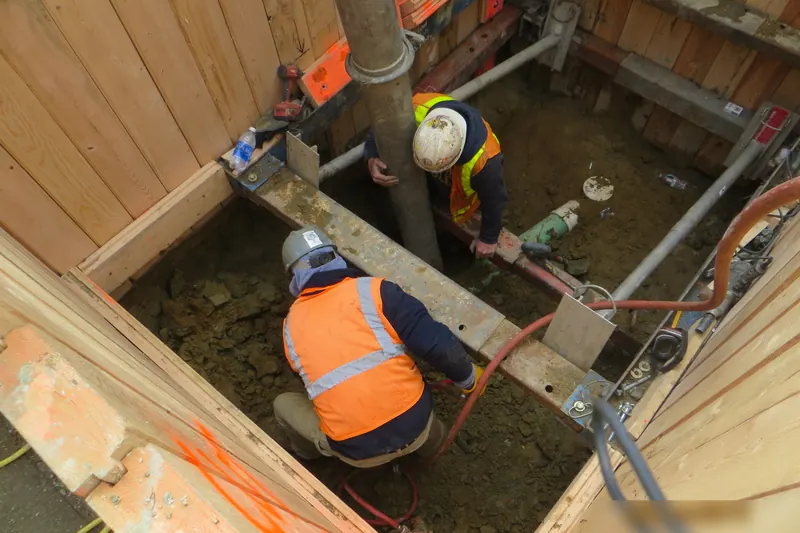
The choice is rarely the owner's alone. The pipe's material, shape, slope and the length of the damage decide which methods are possible, and a camera recording is what shows those things.
| Method | What it does | Main limit |
|---|---|---|
| Remove and replace | Excavate and lay new pipe | Digging, restoration, utilities in the way |
| Spot (point) repair | Fix one short section, open-cut or trenchless | Trenchless spot repair limited to 6-inch and larger laterals in 2004 |
| Cured-in-place lining | Resin-soaked liner cured inside the old pipe | Pipe must be cleaned first and hold its shape |
| Pipe bursting | Break old pipe outward, pull new pipe in | Needs excavated pits at both ends |
| Grouting or epoxy injection | Seal leaking joints | Only for pipe that is otherwise sound |
What decides the method
The camera comes first. NASSCO's inspection specification warns that a hole under the flow line may not be visible, which is why it calls for flow control so the full circumference can be seen (NASSCO). Reading a sewer inspection report explains the defect codes.
Material is next. FEMA's homeowner guide observes that old-house laterals are often clay or cast iron, and that once a camera shows decay, newer pipe that stands up better to roots, rust and cracking is an option (FEMA). Bituminous fiber pipe, sold as Orangeburg, flattens as it ages, and Fairfax, Virginia says it may be too fragile to survive the jetting done before lining. When a sewer line can't be lined sets out those limits.
Shape and slope matter because a liner follows the old pipe. A sag or a back-pitched run stays a sag after lining. Only an excavated replacement can reset the grade, and the state code's Table 704.1 sets a floor of one-eighth of an inch of fall per foot for the 3- to 6-inch sizes houses use (PCNYS chapter 7).
Code rules that apply
Bursting is the one method the state code addresses by name. Section 716 confines it to gravity lines no bigger than 6 inches, swapped size for size, and specifies the polyethylene pipe that goes in. The code also requires video of the old line beforehand and of the new one afterward, with the building official signing off on the second recording, and any missing cleanouts have to be added. Pipe bursting a sewer line has more.
A full interior re-pipe has a rule too: under §703.4, an existing building sewer can be kept only after someone looks inside it and confirms its pitch, condition, clearance and size.
Deadlines in two towns
The City of Rye and the Village of Mamaroneck both give an owner 60 days to repair a non-compliant lateral after becoming aware of the problem or receiving notice. If the work is not done, the municipality may do it and lien the cost against the property (City of Rye). Elsewhere, no comparable rule was confirmed; ask the building department. No current government cost ranges exist for any method; what drives replacement cost covers the factors.
Key facts
- EPA calls removing and replacing a defective lateral the most common and proven method (EPA).
- EPA's 2004 report limited trenchless spot repairs to laterals 6 inches or larger.
- Grouting and epoxy injection are mostly for sealing joints in otherwise sound pipe (EPA).
- Section 716 allows bursting only on house sewers of 6 inches or less, and requires recorded video on both sides of the job (ICC).
- Rye and the Village of Mamaroneck give owners 60 days to repair a non-compliant lateral (City of Rye).