What a sewer camera inspection shows
Updated October 30, 2026 · 3-minute read · Old House Sewer Lines
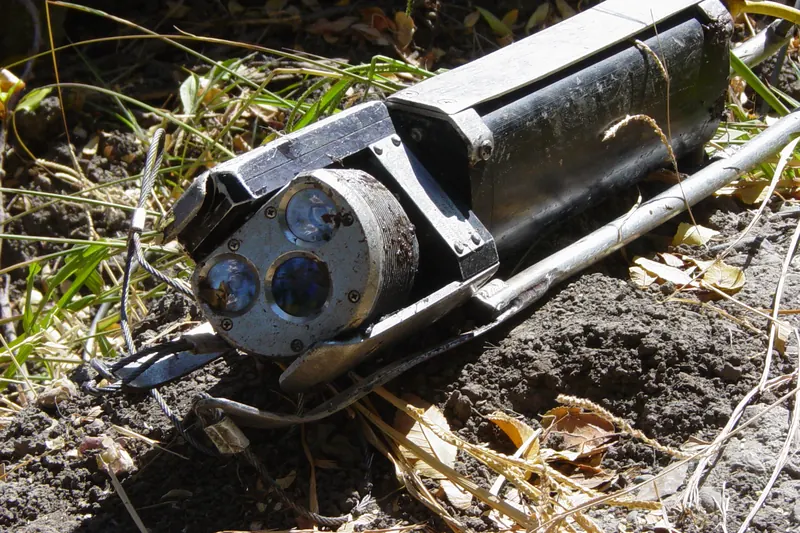
A sewer camera inspection sends a waterproof camera through the house lateral and records the inside of the pipe on video, showing roots, cracked or offset joints, breaks, debris and improper connections. It is the standard way to judge an old line before deciding on cleaning, repair or replacement.
What the operator watches for lines up with the US Environmental Protection Agency catalogue of private-line trouble. That catalogue covers wrong hookups, leaking or separated joints, roots, pipe that its bedding no longer holds up, worn-out old pipe, and cleanout caps that are cracked or gone. One study EPA cites found that almost a quarter of lateral defects involved cleanout caps alone, though that study dates from 1995.
What a complete survey looks like
NASSCO, the trade association that sets the main North American pipe-inspection standard, publishes a CCTV specification that public agencies adapt for contracts (NASSCO CCTV guideline). It calls for a color pan-and-tilt camera, or a side-wall scanning camera built for sewer work. Pan-and-tilt cameras must stop and look around at each service connection. The video must show the full circumference of the pipe, flow must be controlled so standing water does not hide the bottom, and work is put off after heavy rain. A homeowner job is rarely written to that full specification, but the same points tell you whether a recording is thorough.
Findings are often coded under NASSCO's Pipeline Assessment Certification Program, known as PACP, with a lateral version called LACP. The report splits defects into structural problems and operation-and-maintenance problems. Reading a sewer inspection report walks through that format.
When the code or the town asks for video
Some local and state rules make video mandatory. The Village of Mamaroneck requires a licensed plumber to supply a CCTV video record of the entire sanitary lateral before a discharge compliance certificate can issue on a sale or major renovation, and Rye's law has the same requirement (Rye sewer lateral page). The details are in selling a house with a sewer lateral certificate.
Under the state plumbing code, pipe bursting requires a recorded video survey before the work, noting cleanouts and connection depths, and a second video afterward that the building official must approve before pressure testing (NYS code chapter 7). When a whole drainage system is replaced and the old building sewer is to be reused, the code requires that sewer to be examined internally for slope, breaks, obstructions and size.
Access and practical points
The camera usually goes in through a cleanout. State code puts one no more than 10 feet upstream of the spot where indoor drain piping becomes the building sewer, and many older houses have the cleanout openings on a house trap instead; see where the sewer cleanout is. When a snake fails to restore flow, FEMA's advice to homeowners is that the clog likely sits past the snake's reach and the entire line needs a plumber's look (FEMA).
Ask for the video file itself, not just a summary, along with distances from the access point. Lining contractors use the recording to decide whether a pipe qualifies; the City of Fairfax, Virginia, makes eligibility depend on a CCTV recording. A camera also has blind spots, covered in what a sewer camera can miss.
Key facts
- EPA lists faulty joints, root intrusion, failed bedding, aging pipe material and broken cleanout caps among common lateral defects (EPA).
- NASSCO's CCTV guideline calls for a color pan-and-tilt or side-wall scanning camera and video of the full pipe circumference (NASSCO).
- PACP is NASSCO's standard defect-coding system; LACP applies it to laterals (NASSCO syllabus).
- The Village of Mamaroneck and Rye require a CCTV video of the whole lateral for a discharge compliance certificate.
- The state code requires recorded video before and after pipe bursting (NYS code).