Sewage in the basement: what to do first
Updated October 30, 2026 · 2-minute read · Old House Sewer Lines
When a sewer backup reaches the basement, the first move is to stop every tap, toilet, washer and dishwasher in the house, because each gallon used upstairs can only drain into the same blocked pipe. Then keep clear of the water until the electrical risk is known.
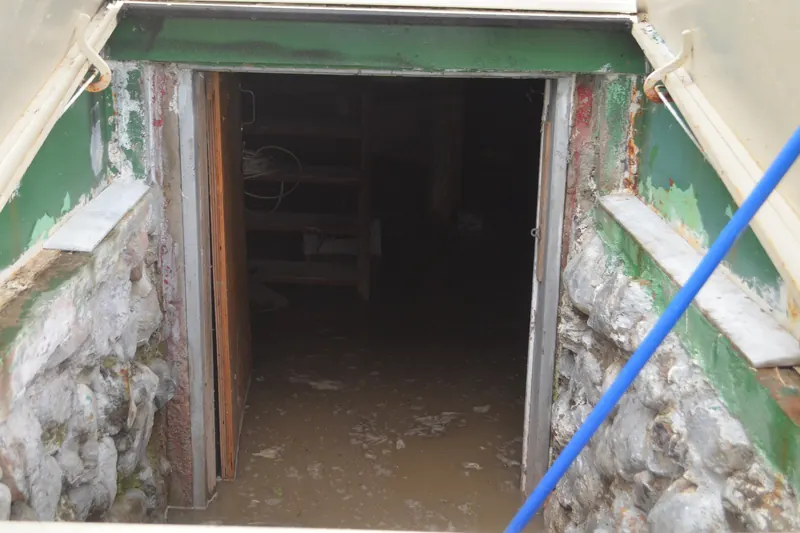
Standing water and live equipment are the immediate danger. CDC guidance says never to switch power on or off, or use an electric tool or appliance, while standing in water, and that if you would have to enter standing water to reach the main switch, an electrician should turn it off (CDC). Con Edison tells customers to "exercise extreme caution" in flooded basements because water touching energized equipment can cause serious injury (Con Edison).
Lateral or main
The next question is where the blockage sits. The county's wastewater division puts the house lateral on the property owner and the street main on the local municipality (Westchester County DEF). Town wording has been confirmed only for a few places. In Mount Vernon the sewer plan puts the owner in charge of the service line up to where it joins the city sewer, and city crews check flow in the manholes; if flow there is normal, they tell owners the problem is in their lateral (Mount Vernon CMOM plan). Rye, the Village of Mamaroneck and Yonkers publish their own wording. Elsewhere, call the public works or engineering department and ask whether a crew can check the main. Main versus lateral backups walks through how that check works.
If the main is flowing, a licensed plumber or sewer contractor clears the lateral. In Westchester, plumbers need a county trade licence. Clearing outside the house carries one extra rule: gas utilities warn that a gas line may, in rare cases, have been bored straight through a sewer pipe. NYSEG says a clog inside the building is not a gas-system issue, but one outside it could be, and calls a camera inspection "good practice" (NYSEG). Ask for a camera before anyone cuts through an outdoor clog; cross bores explains why.
Do not open a cleanout cap or house-trap plug yourself while the line is full. The pressure behind a blockage can push sewage out with force. That is the plumber's job.
Heavy rain and repeat backups
A backup during a heavy storm may be the main overloading rather than a clog. FEMA's urban flooding guide describes backwater valves for exactly that case, letting wastewater out while blocking sewage from coming back in when municipal mains are overloaded (FEMA). See why sewers back up in heavy rain and how a backwater valve works.
After the water goes down
Photograph the damage before throwing anything out; EPA's flood cleanup guidance says to document damage for insurance (EPA Region 2). Cleanup has its own rules for gear, children and porous materials, set out in cleaning up after a sewage backup. Whether any of it is insured depends on an optional endorsement; see sewer backup coverage in New York.
Key facts
- If reaching the main switch means stepping into standing water, CDC says to have an electrician turn it off (CDC).
- The county assigns the lateral to the homeowner and the main to the city, town or village (Westchester County DEF).
- Mount Vernon crews check flow in the manholes and refer owners to a plumber when the main is flowing (Mount Vernon CMOM).
- NYSEG says an indoor clog is not a gas-system issue, while an outdoor one could be a cross bore (NYSEG).
- EPA advises documenting damage for insurance before cleanup (EPA Region 2).